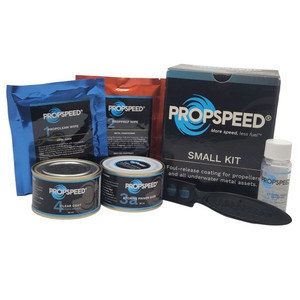


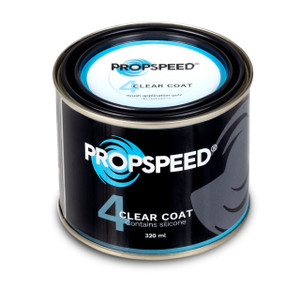

Propspeed Foulfree Transducer Coating
Oceanmax
$78.21
(No reviews yet)

Write a Review

Oceanmax
Propspeed Foulfree Transducer Coating
Fouling on the face of transducers can reduce their sensitivity, decreasing bottom-echo returns and fish targets. Keep your transducer performing at its peak with Foulfree.
The revolutionary foul-release coating that protects transducers from marine growth, certified by Airmar.
Why do I need Foulfree?
Fouling on the face of transducers can reduce their sensitivity, decreasing bottom-echo returns and fish targets and reducing the detail on the sonar image you receive. Foulfree forms a slick surface marine growth can’t grab onto, keeping your transducer surface clean and clear.
Is Foulfree environmentally friendly?
Yes. Foulfree is a specialized foul-release coating that does not poison marine growth or release any toxins into the marine environment.
Can Foulfree damage my transducer?
No. Foulfree has been tested and proven to have no adverse effects on transducers.
How long will Foulfree last?
Foulfree lasts a minimum of 12 months, with an even longer service life in cooler climates.
Transducer Defense. Foul-Release.
Any marine growth on your transducer will negatively affect its performance, reducing the detail on the sonar image you receive. If you had a stereo speaker with something in front of it, absorbing the sound, you’d still hear the music but you’d lose some of the definition and detail. A transducer works in a similar way. Boat owners and captains the world over have experienced the Propspeed® difference — a longlasting, ultra-smooth surface that prevents marine fouling. Now Propspeed® is bringing its patented foul-release technology to your transducer.
See what’s under your boat with clarity.
Your transducer is your boat’s underwater eye. Keep your vision clear with Foulfree.
- Transducer safe - FoulfreeTM is Airmar® certified and has no adverse effects on transducers.
- See the real picture - A foul-free transducer equals more clarity, detail and visibility below the waterline.
- Foul-release, not anti-foul - A super slick coating that marine growth cannot stick to and that does not poison the marine environment.
Better Boats, Better Oceans
Fouling of running gear is a constant headache for boat owners worldwide. Propspeed®, the industry leader in foul-release coatings, has been tackling the problem head on for more than 20 years. Now Propspeed® is applying its propeller know-how to transducers to bring you FoulfreeTM, a revolutionary foul-release coating that protects transducers from marine growth to ensure accurate signal transmission. With the Propspeed® promise of proven performance, you can rely on FoulfreeTM to keep your transducer free of marine growth for a year or more.
Technical Specifications
- Product Line: Foulfree
- Typical Uses: As a fouling preventative coating for transducers.
- Physical Properties
- Binder Type: Silicone Polymer
- Solvent: Aromatic/Aliphatic Blend
- Colour: Clear Coating
- Finish: Glossy
- Dry Time: 20 minutes touch dry 8 hours hard dry at 20°C
- Recoat Time: Between 8 hours and 5 days at 20°C
- Theoretical Coverage: 12 sqm/ 1 ltr
- Recommended film build: 75 microns per coat
- Shelf life: 36 months
Surface Preparation & Application
Gloves and protective glasses must be worn at all times. For better adhesion of Foulfree™ Transducer Coating on plastic fairing (polyethylene, polypropylene, nylon, etc.), you may need to use a piece of 40 grit sandpaper—NOT included. Do NOT sand the transducer housing or face as it will damage the transducer, voiding the manufacturer’s warranty.
Step 1: SURFACE PREPARATION
Transducer in service:
Remove fouling and/or any previous coatings from the transducer housing and face with the abrasive pad provided.
- In case of heavy fouling, scrape transducer face with a metal putty knife without gouging the surface. Drag the putty knife across the transducer face at a perpendicular angle and follow with a wet sanding block. Never use a power sander or pressure washer on the face of the transducer.
Take care not to scratch or damage the transducer face.
Fairing blocks ONLY:
To improve adhesion between plastic fairing blocks and the Foulfree™ coating, we recommend sanding the fairing block with 40 grit sandpaper – sold separately.
- Abrade the fairing block with 40 grit sandpaper to achieve a roughened surface.
- Remove any residue from sanding.
Transducer Face & Housing:
- Lightly scuff/abrade plastic housing and face of the transducer. Do not scour or deeply scratch the face of the transducer.
- Tape off any areas you do not wish to coat with the Foulfree™ Transducer Coating.
- Clean the transducer face with the XDclean wipe provided. Immediately remove any residue with a clean, dry rag. Ensure the surface is 100% clean and dry before proceeding.
STEP 2: APPLICATION
- Squeeze Foulfree™ Transducer Coating onto the provided application brush.
- Gently apply one thin coat to the surfaces that you want to protect from fouling.
- Make sure there are no heavy runs or sags. You'll have 5 to 10 minutes to touch these up.
STEP 3: DRY TIME
- Foulfree™ requires a minimum of 8 hours to dry before launching. In colder conditions, 40-60°F (5-13°C), wait at least 24 hours before launching.
- Foulfree™ can sit out of water for extended periods of time in warm or cold climates with no adverse effects.
Performance and Limitations
Performance:
- Zero toxic substances
- Good fouling prevention properties
- Clear coating
- Long service life
- Easily recoated
Limitations:
- Soft coating, care required to prevent mechanical damage
- Must be removed completely when recoating
- Contains silicone and careful use is required to prevent contamination of other surfaces
- The Propspeed system is not recommended nor approved for use in aquaculture or contact with food products.
Health and Safety
Clear Coat: Contains organic solvents including xylene. Do not expose to naked flame or high temperature heating equipmentAvoid skin contact. It is recommended that a barrier cream or gloves be used for hands and eye protection is worn. Always ensure adequate ventilation when painting.
Transport
- UN No.: 1263
- Class: 3b
- Hazchem: 3Y
- Packing Group: III
Storage: Do not store close to naked flames or near high temperature heating equipment.
First Aid
- If swallowed: Immediately call a doctor/physician. Rinse mouth with water. Do NOT induce vomiting.
- Skin contact: Wash with soap and water.
- Eye contact: Flush with copious quantities of clean water. Seek medical attention.
- Inhalation: Remove to fresh air. Seek medical attention.