Posted by Jeff Dusting on 30th Jun 2014
Going Beyond the Bay - A Gear Guide
Going Beyond the Bay - A Gear Guide to Get you and your boat to Category 3
The following has been compiled as a guide for sailors looking to venture into open waters and is based upon the assumption that you and your boat already meet the AYF Categrory 6 safety standard. The items listed here are those items identified as being required to meet the AYF Category 2 Safety Audit.
This page provides the reader with 3 options foreach of the key items of equipment, and nominates our view of the "Best Buy" - noting that each product has its relative merits, and everyone's requirements are slightly different. Equipment covered includes:
- EPIRB
- Bosuns Chair
- Lifebuoy with light and drogue
- Drogue or Sea Anchor
- Flares
- Personal Safety Equipment
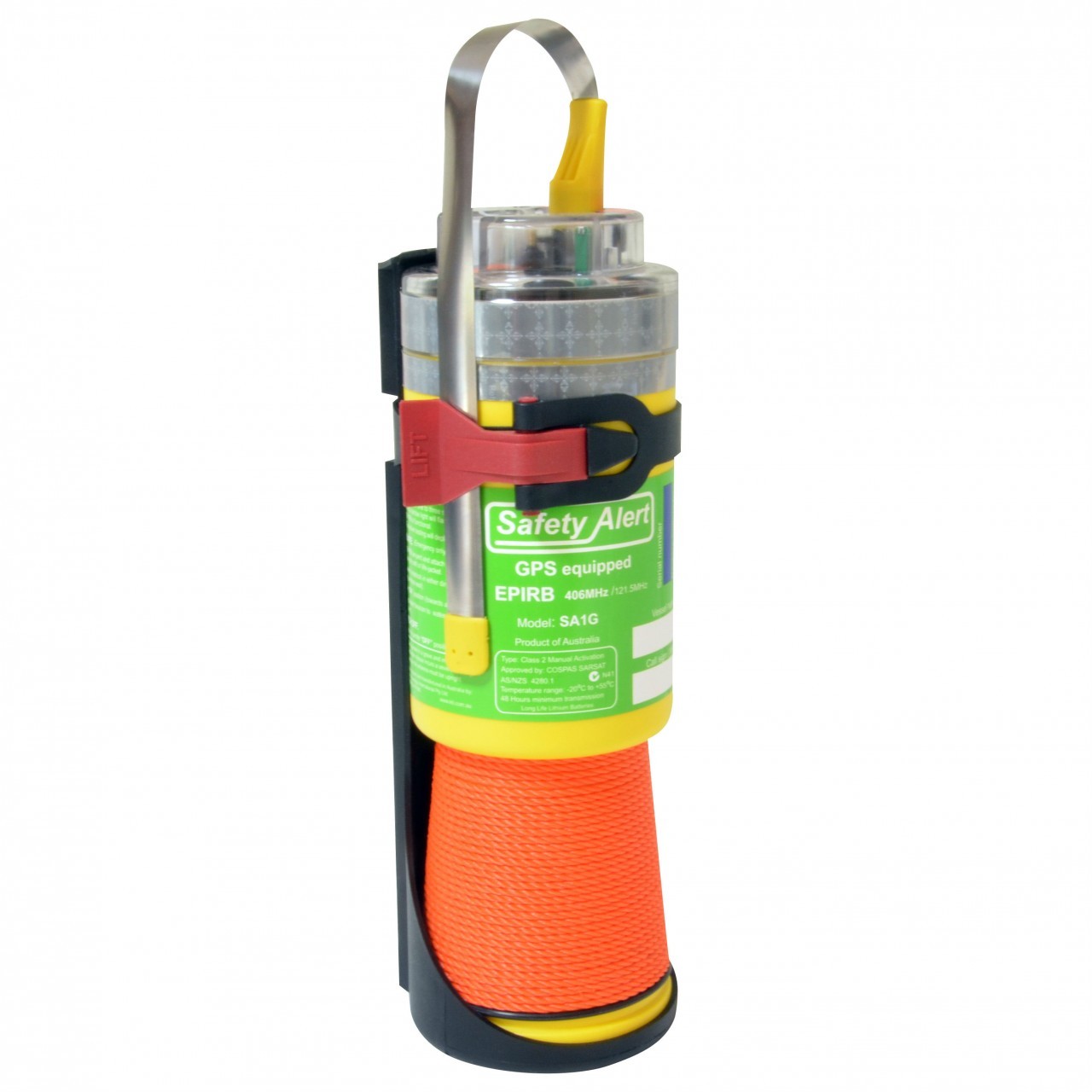
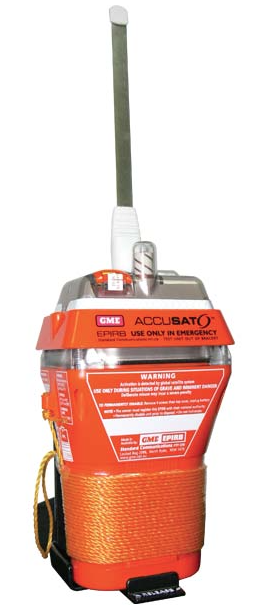
While you can by Emergency Position Indicating Radio Beacons (EPIRBs) with out an inbuilt GPS - we don't recommend it. A GPS enabled EPIRB provides your precise position to emergency authorities, updated regularly to account for drift - improving your chance of rescue significantly.
When it comes to selecting your EPIRB - there are really only two choices at the moment, ACR's GPS enabled EPIRB is still on its way, leaving the products from GME and KTI. The only real point of difference between these models is battery life and form factor - same GPS performance, both made in Australia.
| KTI SA1G | GME |
|
|
|
| Australian made, 10 year warranty and battery |
Australian made with a 6 year battery life (with free battery replacement after 12 years) |
| $299 | $269 |
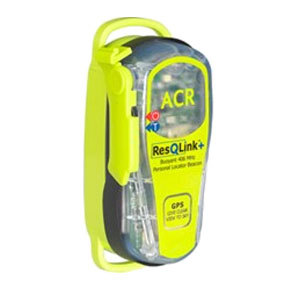
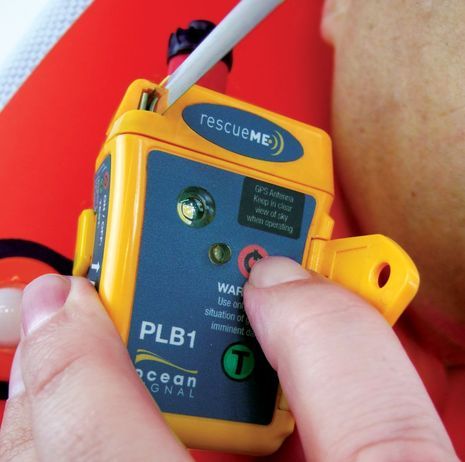
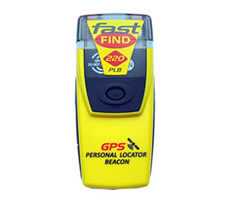
Personal Locator Beacons are getting smaller and more capable year on year, while there are other brands, we have proposed the top 3 here.
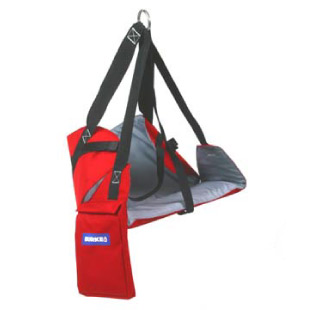
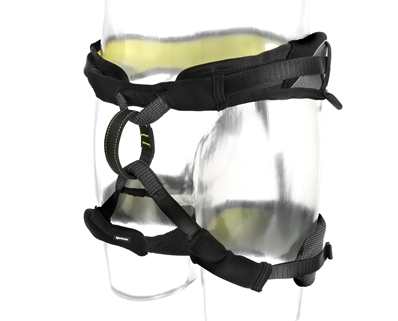
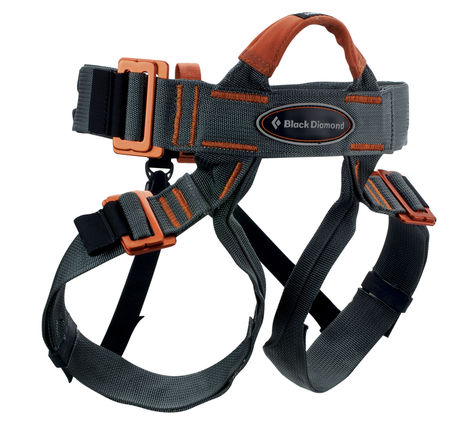
As discussed in the Beyond the Bay training program, there are some real advantages to a climbing harness in lieu of a Bosun's chair - our recommendation is the Spinlock Mast Pro Harness - for comfort and that all so important feeling of security.
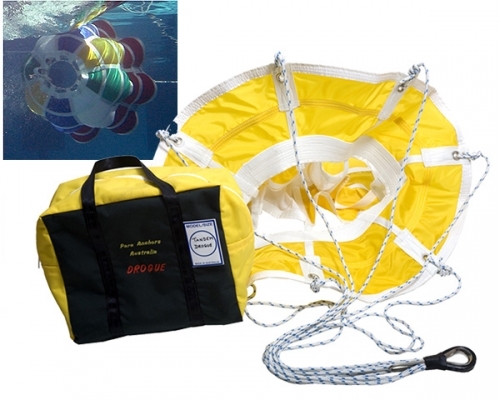
Firstly - the difference between a drogue and a sea anchor (Para Anchor).
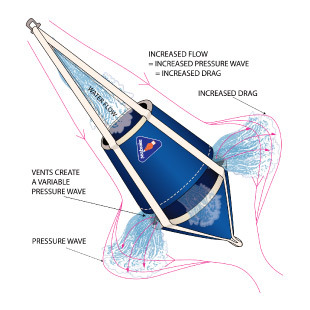
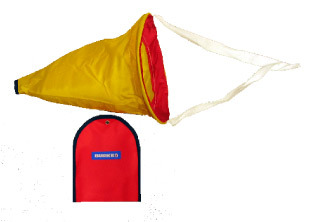
A Drogue is deployed from the stern and designed to provide greater control, vary the speed of the vessel and improve directional stability downwind or when crossing a bar. This is particularly important when running before large seas, reducing the risk of broaching, particularly in breaking waves and shallow seas. It can also be rigged as an emergency steering device and help prevent overtaking when under tow.
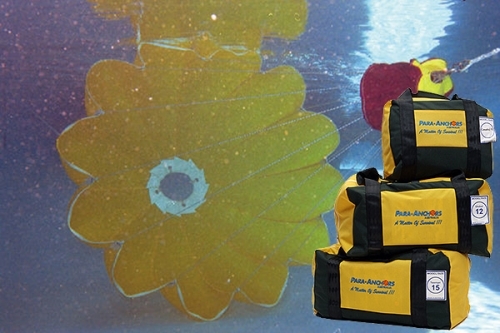
A Para Anchor or sea anchor is designed to provide sufficient power to hold the bow of a vessel head to wind in the worst storm conditions. It should be deployed from the bow of the vessel and greatly reduces the risk of broaching, capsizing or rolling, keeping the boat more comfortable and stable throughout the duration of the heavy weather. Most importantly it allows the vessel to take the storm head on rather than running with it, which reduces the time spent in discomfort and allowing the crew to rest.
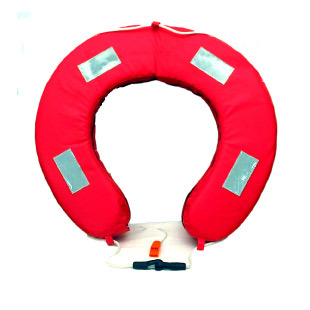
Lifebuoy with light and drogue
Each of these components (lifebuoy, light and drogue) can be purchased separately, and so, we have just included the bests of each in the table that follows - contact us at Adventure Safety if you'd like information regarding other options. The entire assembly is available as a kit for a small saving - take a look here.
| Apollo Light | Drogue | LifeBuoy |
|
|
|
|
|
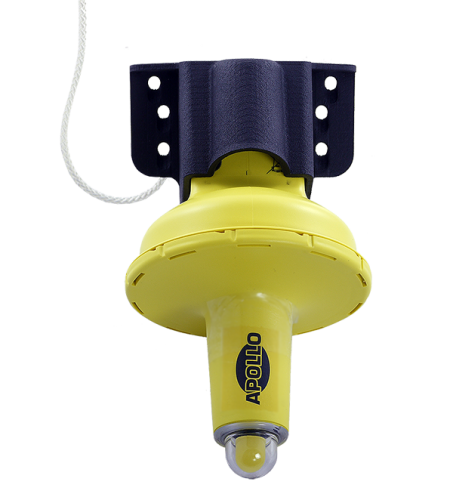
This is our recommended lifebuoy light ... its rigged so that when the lifebuoy is thrown off the boat, the light is activated - no water activation, no gravity activation, to risk of the light not floating right way up. There are cheaper options - like this one. |
No many points of difference on this item. . | This model complies with the YA requirement - it includes a whistle, reflective tape and a line around the outside of the lifebuoy. |
| $96.59 | $14.95 | $64.91 |
Flares - 2 white, 4 parachute, 2 red, 2 smoke
** Stay Tuned, we are working on a great deal for Beyond the Bay participants to upgrade their flare inventory. Drop me an email at BTB@adventuresafety.com.au if you are interested ... the greater the level of interest, the lower the prices.
There are a huge range of PFDs available, but our advice is select something that is comfortable to wear - its no good if you are not wearing it, and on longer journeys, comfort becomes very important. In selecting these four we have considered comfort, ease of adjustment, and user reviews.
The options we have described are all ISO / AS compliant and include an integrated harness to allow you to connect to the boat. The options presented also include a spray hood and strobe light.
| Kru Sport Pro | Spinlock Deckvest | Burke 1780 Race Harness | Crewsaver Ergofit 290 Offshore |
|
|
|
|
|
|
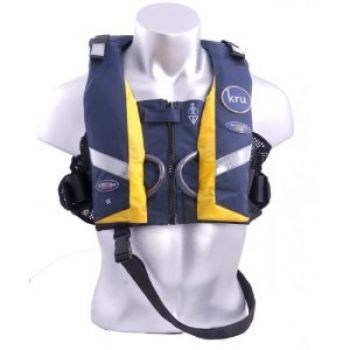
The Kru Sport Pro is the choice of many ocean sailor - it is a waistcoat style vest that sits quite high on the body. Users Say: You either love it or hate it. Features: Zip up for easy access, integrated spray hood Inflation: UML ProSensor |
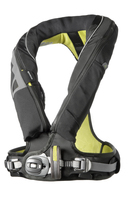
The premium PFD on the market - for comfort and quality - the choice of many experienced sailors and VOLVO Ocean racers. Users Say: I often forget I am wearing it Features: Pylon light, integrated knife, pouch for PLB, and moulded shape to ensure no weight is carried on your neck Inflation: Manual, UML ProSensor, or Hammar |
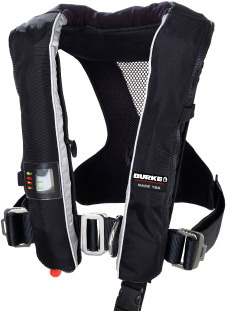
Burke & Baltic's answer to the Kru Sportpro. A light weight PFD with a low profile that spreads the weight across the shoulders and back. Users Say: Lighter than the Kru ... if anything feels too light Features: AS compliant, easy adjustment - spray hood and light added extras Inflation: Manual or UML ProSensor
|
Designed with a moulded shape for comfort ... but ends up being quite heavy. Does very well on the 'roll over' test during certification. Users Say: like the moulded shape and twin crutch straps, but heavy in comparison to the others. Features: Dual Crutch strap and many adjustments to ensure a good fit. Inflation: UML ProSensor or Hammar |
| $385 | $448 | $343 plus $62 for spray hood, and $26 for light | $349 for both models |
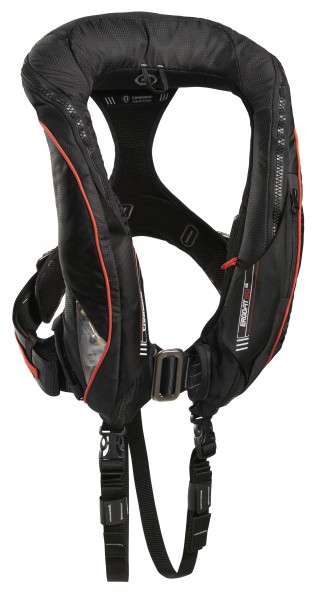
For a budget model, we recommend the Burke Yachtsman. For $150 it is great value, with a low profile bladder - you'll need to add a light and spray hood for an additional $88 ... this is also an option for upgrading your existing PFDs - add the light and spray hood during the next service.
* To learn more about PFD inflation mechanisms, take a look here.
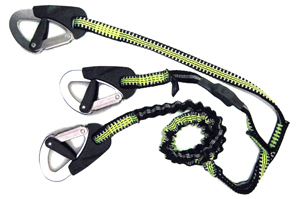
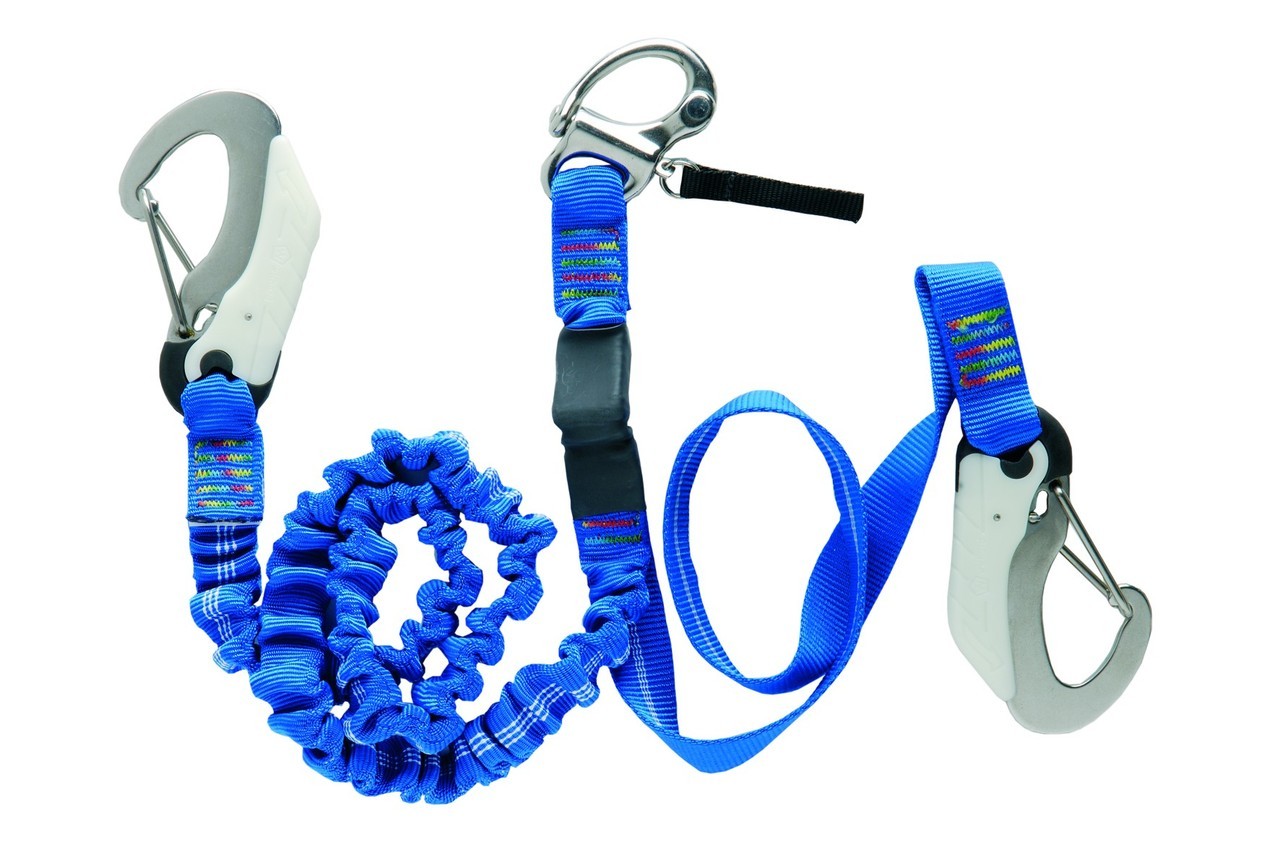
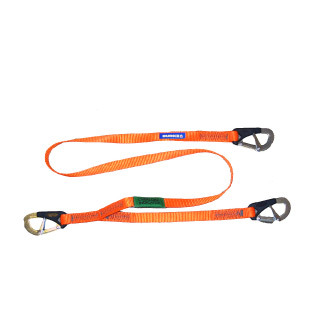
Tethers (Safety Lines)
The three key variables in safety lines (tethers) are: the hook mechanism, whether the tether is elasticised, and the number of hooks.
Hooks: We recommend 3 hooks for everyone ... a shorter hook is handy when working on deck, and the longer one in transit ... even if you don't think you need three hooks to remain attached when moving about your boat.
Hook Mechanism: The hooks must require two independent actions to open - as all of the suggested ones do. But, it is also important that you are able to operate the hooks with one hand - a strength and dexterity test for many tethers on the market.
Tether: The introduction of the elasticised tether is a great improvement, greatly reducing the opportunity to catch and tangle your tether ... we haven't seen an argument against the elasticised tethers yet.